Currently Empty: ₹0.00

Watering Indoor Plants the Right Way: Tips for Healthy Growth
Watering indoor plants sounds straightforward, but over‑watering or under‑watering are among the most common mistakes new plant parents make. Proper watering ensures indoor plants stay healthy, vibrant, and long‑lasting.
Why Proper Watering Matters
Plants absorb water to carry nutrients and maintain turgor (firmness). Over‑watering can lead to root rot; under‑watering can cause leaves to wilt or drop. Indoor conditions — less sunlight, closed windows, central heating — affect soil moisture differently than outdoor gardens. Therefore, a careful watering routine is essential.
How Often Should You Water Indoor Plants?
There’s no one-size-fits-all answer — frequency depends on plant type, pot size, soil, and indoor climate. As a general rule, water when the top 2–3 cm of soil feels dry. For many indoor plants, this may be once every 7–14 days.
Tips for Watering Indoor Plants
- Check soil, not schedule: Instead of watering on fixed days, use your finger or a moisture meter to check soil dryness.
- Use room-temperature water: Cold water can shock roots; lukewarm or room-temperature water is ideal.
- Water thoroughly but infrequently: Water until it drains from the pot’s drainage hole; discard any excess after 15–20 minutes to avoid root rot.
- Adjust based on season & climate: In dry or sunny months, check soil more often; in monsoon or humid months, watering may be less frequent.
- Avoid mistaking dust for dryness: Touch the soil — not the leaves — when deciding to water.
Pot & Soil Considerations
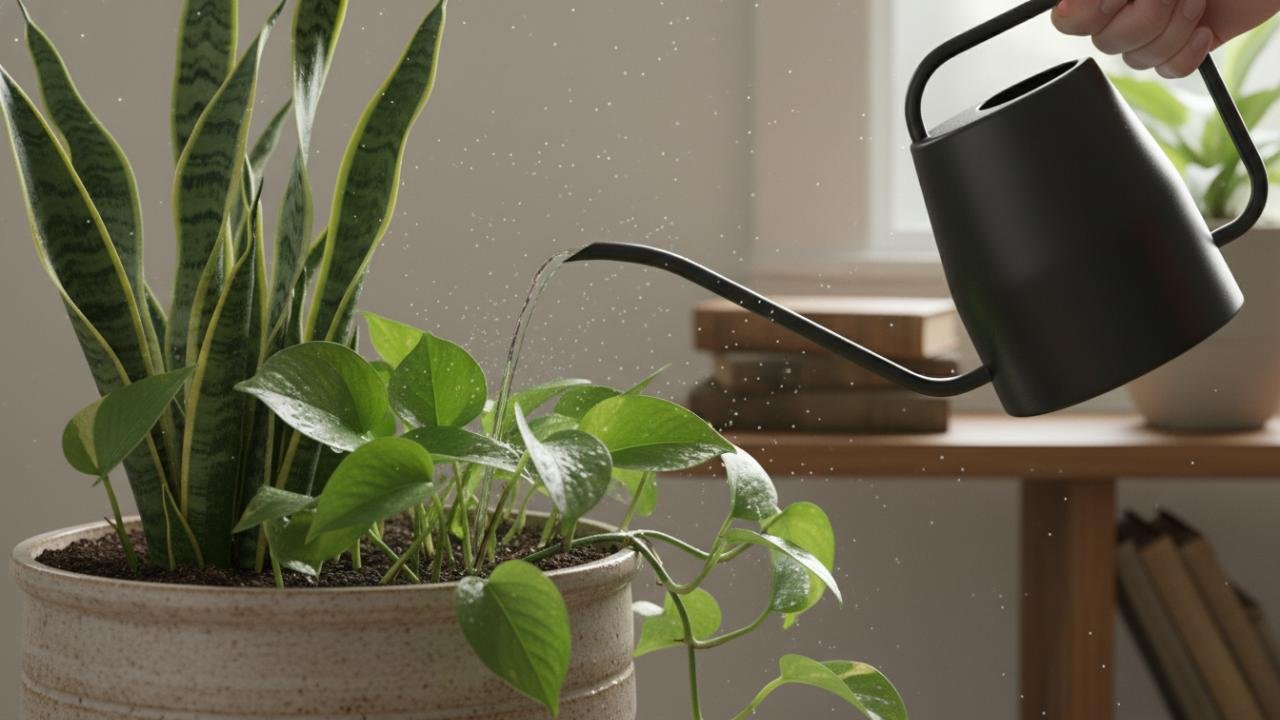
Use pots with drainage holes to avoid water logging. Combine regular potting soil with perlite or sand to improve drainage — especially for plants like succulents or snake plants that dislike soggy soil. Lightweight pots (ceramic or terracotta) work well as they allow soil to dry evenly.
Common Watering Mistakes to Avoid
- Watering on a fixed schedule regardless of soil moisture.
- Using cold water directly from tap in hot conditions.
- Letting pots sit in water for long periods.
- Ignoring changes in plant behavior (e.g. yellow leaves, slow growth) — these can signal watering issues.
Proper watering is a fundamental part of indoor plant care. By checking soil moisture rather than following rigid schedules, adapting to season and climate, and using the right pots and soil — you can keep your indoor plants healthy, thriving, and beautiful for years.